Onze Locatie
304 Noord Kardinaal Straat.
Dorchester Center, MA 02124
 Ga naar de inhoud
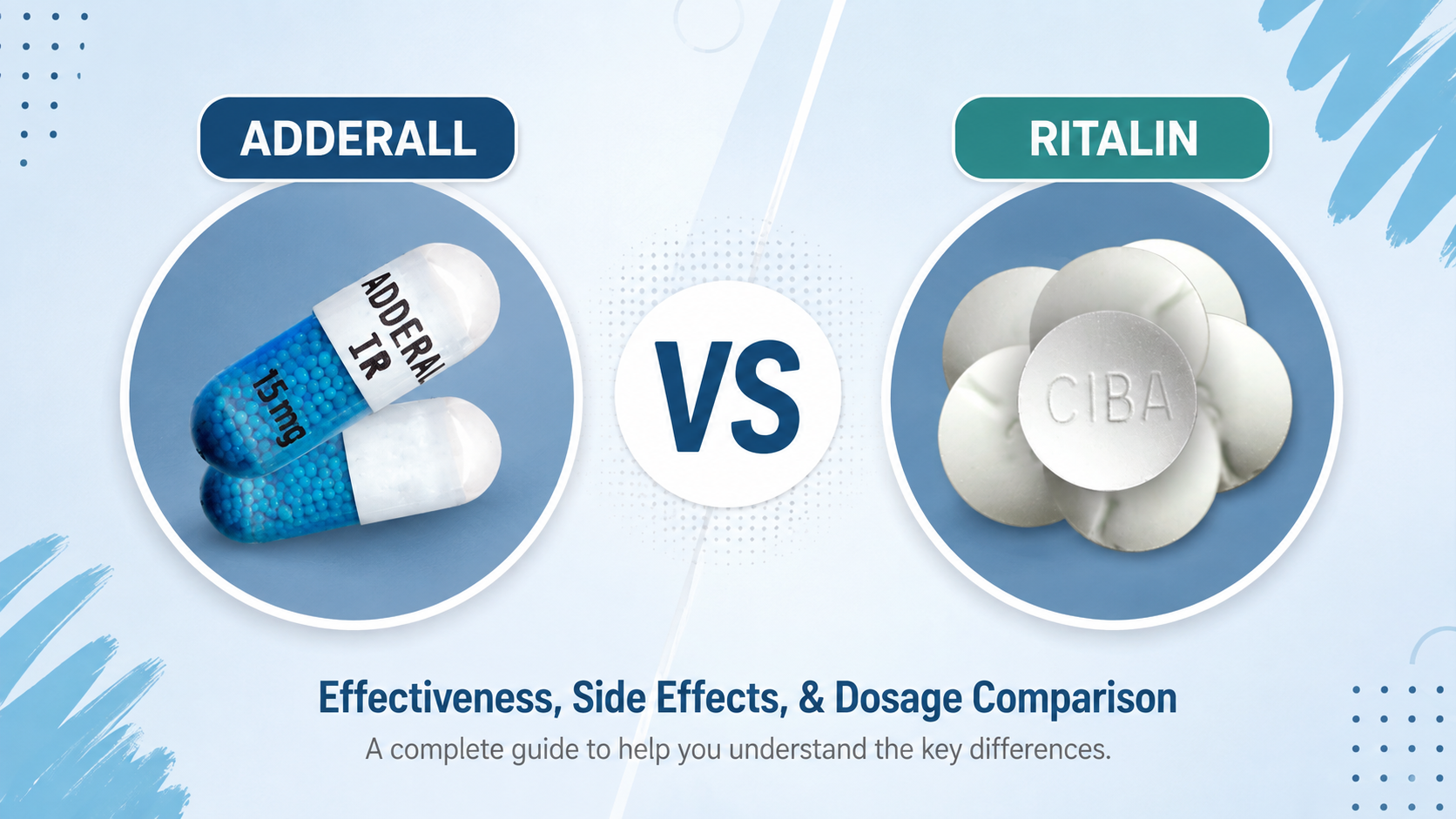
Attention-Deficit/Hyperactivity Disorder (ADHD) affects both children and adults, making it difficult to focus, stay organized, and manage impulsive behavior. Two of the most commonly prescribed medications for ADHD are Ritalin and Adderall. While both medications are effective for many people, they differ in their active ingredients, duration of action, side effects, and how they are prescribed.
This guide explains the differences between Ritalin versus Adderall to help you better understand these medications. Always consult a qualified healthcare professional before starting, stopping, or changing any prescription medication.
Ritalin is a prescription medication that contains methylphenidate. It belongs to a class of medications known as central nervous system (CNS) stimulants and is commonly prescribed to help manage ADHD symptoms. It is also used in some cases to treat narcolepsy.
Ritalin works by increasing the levels of certain brain chemicals, such as dopamine and norepinephrine, which play important roles in attention, focus, and impulse control.
Adderall is another prescription stimulant used to treat ADHD. It contains a combination of amphetamine and dextroamphetamine, which also increase dopamine and norepinephrine activity in the brain.
Like Ritalin, Adderall may improve concentration, reduce hyperactivity, and help people manage impulsive behaviors when taken under medical supervision.
| Feature | Ritalin | Adderall |
|---|---|---|
| Active Ingredient | Methylphenidate | Amphetamine & Dextroamphetamine |
| Medication Class | CNS Stimulant | CNS Stimulant |
| Common Uses | ADHD, Narcolepsy | ADHD, Narcolepsy |
| Available Forms | Immediate-release, Extended-release | Immediate-release, Extended-release (Adderall XR) |
| Prescription Required | Yes | Yes |
Both medications work by increasing the availability of dopamine and norepinephrine in the brain. These neurotransmitters help regulate:
Although they have similar goals, they use different active ingredients and may affect individuals differently.
The length of time each medication lasts depends on the specific formulation prescribed.
Your healthcare provider chooses a formulation based on your symptoms, daily schedule, and treatment goals.
When prescribed appropriately, both medications may help:
Not everyone responds the same way, so treatment is individualized.
Like all prescription medications, Ritalin and Adderall can cause side effects.
Common side effects may include:
Serious side effects are less common but require prompt medical attention. Contact a healthcare professional if you experience severe symptoms or concerning reactions.
There is no single medication that is best for everyone.
A healthcare provider may consider factors such as:
Finding the most suitable medication often involves ongoing evaluation and follow-up.
Some people may switch medications if they experience inadequate symptom control or side effects. However, never change or stop prescription ADHD medication without consulting your healthcare provider, as dosage adjustments and monitoring may be necessary.
Medication is only one part of ADHD management. Many people also benefit from:
A comprehensive treatment plan is often more effective than medication alone. Here are some more tips for ADHD medication.
They are different medications with different active ingredients. Their effects and appropriate doses are not directly comparable, and individuals may respond differently.
Yes. Both medications may be prescribed for adults with ADHD when a healthcare provider determines they are appropriate.
Understanding the differences between Ritalin versus Adderall can help patients and caregivers have informed discussions with their healthcare providers. While both medications are widely used to treat ADHD, they differ in their active ingredients, duration of action, and individual response.
The most appropriate treatment depends on each person’s medical history, symptoms, and overall health. If you have questions about ADHD medications, consult your doctor or pharmacist for personalized medical advice.
 Optimized by Seraphinite Accelerator